Ultragenyx, based in Novato, California, and GeneTx Biotherapeutics, headquartered in Downers Grove, Illinois, are partnering to advance a therapy for a rare neurogenetic disorder, Angelman syndrome. Ultragenyx will also have the option to acquire GeneTx.
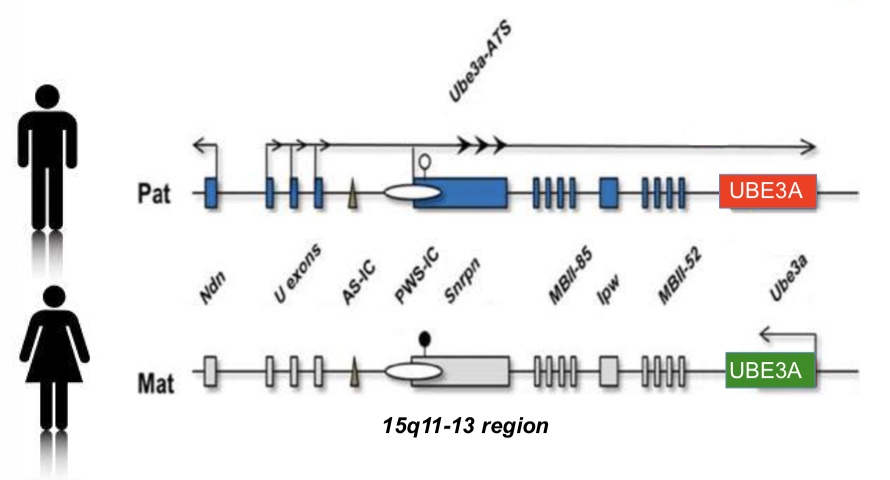
Angelman syndrome primary affects the nervous system. It is caused by a loss of function of the maternally inherited allele of the UBE3A gene, which is found on chromosome 15. When the same gene deletion is on the allele inherited from the father, it presents as a completely different syndrome, Prader-Willi syndrome, a classic example of imprinting.
Symptoms of Angelman syndrome include a small head, specific facial features, severe intellectual disability, developmental delay, speaking problems, balance and movement issues, seizures, and sleep problems. The children are generally noted for a very happy personality. There are no specific treatments.
Under the terms of the deal, Utragenyx will pay GeneTx $20 million for an exclusive option to acquire GeneTx. This can be exercised any time before 30 days after the U.S. Food and Drug Administration (FDA) accepts the Investigational New Drug (IND) application for GTX-102. Ultragenyx can extend the option period by paying a $25 million payment. The extension option can happen any time until 30 months from the first dosing of a patient in a planned Phase I/II clinical trial or 90 days after data is available from that trial. It can extended again.
GeneTx will provide regulatory and scientific expertise and fund all development activities. Ultragenyx will provide staff support as well as strategic consulting and clinical expertise. They will work together to submit the IND and manage the Phase I/II trial.
If Ultragenyx picks up the option to buy GeneTx, it will then take over all development and commercialization activities. It will also acquire GeneTx for an initial purchase price with various milestone payments and royalties on any commercial products.
The IND is expected to be filed in the first half of 2020.
“GeneTx was formed by the Foundation for Angelman Syndrome Therapeutics (FAST), the largest patient organization in the Angelman community,” stated Paula Evans, GeneTx’s chief executive officer. “Donations to FAST, from family and friends, supported the preclinical research on this therapeutic strategy. It is entirely fitting that GeneTx would partner with a company that not only has proven expertise in the development and commercialization of rare disease therapeutics, but truly puts the patient first in each and every step of the treatment process.”
In March 2018, GeneTx’s GTX-101 received the FDA’s Orphan Drug Designation. The drug is an antisense oligonucleotide designed to inhibit transcription of the UBE3A-AS across the typically silent paternal allele of UBE3A. Antisense olignonucleotides are synthetic strings of nucleic acids that interfere with the normal processing of a target gene. The company believes that activating the silenced paternal UBE3A gene will mitigate Angelman symptoms.
What this basically means is that in Angelman’s syndrome, the gene inherited from the father isn’t being expressed, and by stimulating that gene to work, GTX-101 may eliminate some of the symptoms.
“Angelman syndrome is a devastating neurological condition with no treatment options that represents a very significant unmet medical need,” stated Emil D. Kakkis, president and chief executive officer of Ultragenyx. “GTX-102 is a novel and promising potential therapy specific to the disease mechanism in these patients, and we are pleased that GeneTx chose to partner with us based on our track record of rapid, innovative development in rare disease.”
The NEPTUNE study will evaluate the safety and effectiveness of an investigational medicine called OV101 on various aspects associated with Angelman syndrome in individuals age 2 – 12 years old.
The online pre-screening process will open on August 1, 2019 for ages 9 – 12. The second age group (beginning November/December) will be ages 4-8. The third age group (beginning January/February 2020) will be ages 2-3.
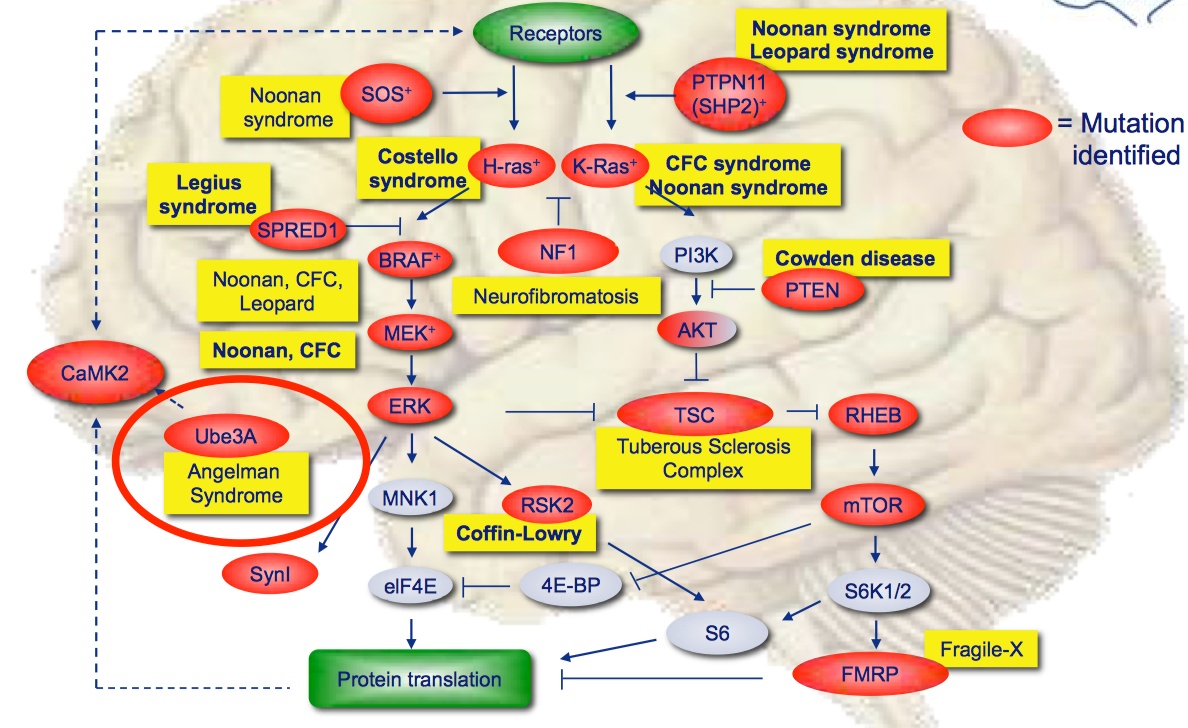
2)许多影响神经发育的蛋白都是兴奋性的,但NF1蛋白为抑制性蛋白。当它无法起到正常起作用时,其调控的下游通路会出现功能增益(gain of function),过度活跃,过度合成蛋白。
合成的蛋白增多很可能就会出现如蛋白质聚集等扰乱细胞正常工作的错误。如果只是其中一个兴奋性蛋白出了问题,虽然可能导致功能减弱(loss of function),但很有可能有其他功能相同或相似的蛋白能够起到补偿作用。
CaMKII变异对神经发育障碍的影响是直到去年才被检测出来的(Küry et al., 2017)。明明我们在二三十年前就知道了它的存在,为什么现在才发现它的变异导致的致病影响呢?这是因为许多其他基因的变异会发癌变,使患者表现出明显的躯体症状,从而容易对患者进行识别和归类。对多个相同症状的患者进行基因检测,就容易得知他们的共同致病基因。这也是为什么许多神经发育障碍的名字中都有“综合征”字样,如天使综合征等。但是CaMKII的病变不如其他明显,难以将该类病变人群归类,因而难以检测致病基因。